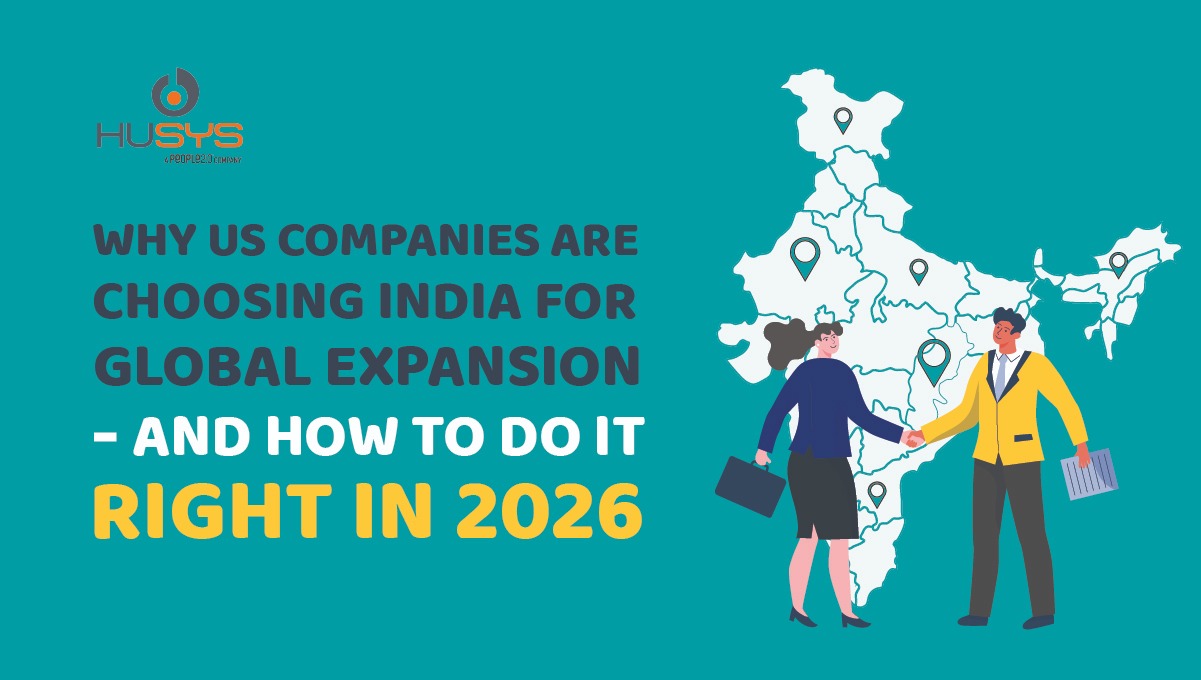
Why this matters: US companies expanding to India face a maze of compliance, payroll, and hiring complexities that can derail growth before it starts. This guide shows you how to enter India fast, compliant, and cost-effectively—without setting up a legal entity.
Who this is for: US-based founders, CFOs, HR leaders, and operations executives exploring India as a talent or market hub. If you’re evaluating how to hire in India without the overhead of incorporation, this is your roadmap. With 23+ years of India-specific experience and 5,000+ clients served, we’ve seen what works—and what doesn’t.
TLDR: What You Need to Know
| Question | Answer |
|---|---|
|
Can I hire in India without a legal entity? |
Yes. An EOR becomes the legal employer while you manage day-to-day work. |
|
How fast can I onboard someone? |
Within 8 working hours with the right EOR partner. |
|
What does it cost? |
Starting at $99/employee/month - far less than entity setup and maintenance. |
|
What compliance risks exist?
|
Misclassification, Permanent Establishment (PE), state-level labor law violations. |
|
Who uses EOR services? |
SaaS, IT/ITES, cybersecurity, fintech, and manufacturing companies hiring remote teams.
|
Why India? The Strategic Case for US Companies
India isn’t just a cost arbitrage play anymore. It’s a strategic talent hub with:
- 1.4 billion people, including 5+ million STEM graduates annually (UNESCO Institute for Statistics)
- English proficiency that ranks higher than most Asian markets
- Time zone overlap with US evenings (ideal for real-time collaboration)
- Cost savings of 60-70% compared to US salaries for equivalent roles
- Government incentives like tax holidays for cloud services and IT exports
But here’s what surprises most US founders: India is not a plug-and-play market.
What Makes India Different
| US Assumption | India Reality |
|---|---|
|
At-will employment |
30-90 day notice periods are standard |
|
Simple payroll taxes |
PF, ESI, PT, TDS, and state-specific rules |
|
Uniform labor laws |
28 states + 6 union territories = different compliance |
|
Easy terminations |
Requires documented cause + settlement negotiations |
|
Minimal leave mandates |
12+ public holidays + 21-30 days annual leave |
Source: India’s Ministry of Labour & Employment
“We thought hiring in India would be like hiring in the US, just cheaper. We were wrong. The compliance burden alone would have required a full-time legal team.”
— CFO, SaaS company (Series B), via Reddit r/startups
The Real Challenge: India's Employment Landscape
The Compliance Maze
India operates under a dual employment framework:
- Central laws (apply nationwide): Industrial Disputes Act, Payment of Gratuity Act, Employees’ Provident Funds Act
- State laws (vary by location): Shops and Establishments Acts, Professional Tax, local labor welfare funds
Example: An employee in Maharashtra pays different Professional Tax rates than one in Karnataka. Miss this, and you’re liable for penalties + back taxes.
The Hidden Costs of DIY Hiring
If you hire directly in India without an entity:
- Permanent Establishment (PE) risk: Your US company could be deemed to have a taxable presence in India
- Misclassification penalties: Treating employees as contractors can trigger ₹50,000+ fines per violation
- Payroll errors: Incorrect PF/ESI calculations = interest + penalties + employee disputes
Real case: A US fintech hired 12 contractors in Bangalore. After an audit, they owed ₹18 lakhs ($21,600 USD) in back contributions + penalties. (Source: Economic Times)
What Is an Employer of Record (EOR)?
An Employer of Record (EOR) is a third-party organization that becomes the legal employer of your India-based team. You retain full control over:
- Day-to-day work assignments
- Performance management
- Project deliverables
- Team culture and communication
The EOR handles:
- Employment contracts (compliant with Indian law)
- Payroll processing (PF, ESI, PT, TDS)
- Benefits administration
- Tax filings and statutory compliance
- Onboarding and offboarding
- HR support and dispute resolution
EOR vs. PEO vs. AOR: What's the Difference?
| Model | Best For | Key Difference |
|---|---|---|
|
EOR |
Companies with no India entity |
EOR is the legal employer |
|
PEO |
Companies with an existing India entity |
Co-employment model; you share liability |
|
AOR |
Managing contractors/freelancers |
Handles compliance for independent workers |
When to use EOR: You want to hire full-time employees in India but don’t want to incorporate a subsidiary.
How EOR Services Work in India
Step-by-Step Process
Step 1: You identify a candidate
↓
Step 2: EOR drafts compliant employment contract
↓
Step 3: Candidate signs with EOR (legal employer)
↓
Step 4: EOR onboards employee (KYC, bank details, tax forms)
↓
Step 5: Employee works under your direction
↓
Step 6: EOR processes monthly payroll + statutory deductions
↓
Step 7: You pay EOR (salary + service fee)
↓
Step 8: EOR handles compliance filings (PF, ESI, TDS returns)
Timeline: How Fast Can You Hire?
|
Milestone |
Timeline |
|
Contract drafting |
1-2 business days |
|
Employee document collection |
2-3 business days |
|
Payroll setup |
1 business day |
|
Total onboarding time |
8 working hours (with Husys) |
Industry average: 5-7 business days
Our benchmark: 8 working hours for standard roles
8 Strategic Benefits of Using an EOR in India
1. Enter India in Days, Not Months
Setting up a private limited company in India takes 4-6 weeks + ongoing compliance. With an EOR, you’re operational in 8 working hours.
Cost comparison:
Entity Setup | EOR Model |
₹50,000-₹2,00,000 incorporation | $0 setup fee |
₹1,50,000+/year compliance | Included in service fee |
6-8 weeks timeline | 8 working hours |
2. 100% Compliance with Zero Overhead
We manage:
- PF (Provident Fund): 12% employer + 12% employee contribution
- ESI (Employee State Insurance): 3.25% employer + 0.75% employee (for salaries <₹21,000/month)
- Professional Tax: State-specific (₹200-₹2,500/year)
- TDS (Tax Deducted at Source): Monthly income tax withholding
- Labour Welfare Fund: Applicable in 16 states
- Gratuity: 4.81% of basic salary (payable after 5 years)
3. Predictable, Transparent Pricing
Our model: $99/employee/month (₹8,250 at current exchange rates)
What’s included:
- Employment contracts
- Payroll processing
- Statutory compliance
- HR support
- Termination management
What’s extra:
- Background verification (₹2,000-₹5,000)
- Visa support (if applicable)
- Recruitment services
4. Mitigate Permanent Establishment (PE) Risk
PE risk explained: If your US company has a “fixed place of business” in India, you may owe Indian corporate tax (25-30%).
How EOR protects you:
- Employees are legally employed by the EOR, not your US entity
- No dependent agent relationship
- Clear separation of employer obligations
Red flag scenario: If your US company invoices Indian clients directly and has employees in India, you may trigger PE. We monitor this through our compliance framework.
5. Access 28 States + 6 Union Territories
We operate across all Indian states, handling:
- State-specific Shops & Establishments Act registrations
- Professional Tax variations
- Regional labor welfare contributions
Example: Hiring in Tamil Nadu vs. Delhi requires different registrations and tax rates. We handle this automatically.
6. Scale Up or Down Without Friction
Unlike entity-based hiring, EOR allows you to:
- Hire for a 6-month project without long-term commitments
- Test market fit with a small team
- Scale to 50+ employees without new infrastructure
Client example: A US cybersecurity firm hired 3 engineers in Pune for a 9-month project. Post-project, they scaled to 15 employees across Bangalore and Hyderabad—all without changing their operational model.
7. Handle Terminations Compliantly
India’s termination laws are employee-friendly:
- Notice period: 30-90 days (or payment in lieu)
- Severance: Gratuity (if >5 years tenure) + unused leave encashment
- Cause requirements: Documented performance issues or misconduct
Common mistake: US companies try to terminate “at-will.” This can lead to labor disputes and settlements of 3-6 months’ salary.
How we help:
- Draft termination letters with legal justification
- Calculate final settlement (notice pay, gratuity, leave)
- Manage exit formalities (PF transfer, Form 16)
8. Focus on Business, Not Bureaucracy
What you avoid:
Without EOR | With EOR |
Monthly PF/ESI filings | Handled |
Annual tax audits | Handled |
Employee grievance management | Handled |
Payroll software + accountant | Handled |
Legal updates (labor law changes) | Handled |
What US Companies Get Wrong About India Hiring
Mistake #1: Treating Contractors as Employees
The trap: You hire someone as a “consultant” to avoid employment obligations.
The risk: If they work fixed hours, report to your team, and use your equipment, Indian authorities may reclassify them as employees. You’ll owe back taxes + penalties.
Solution: Use an EOR for full-time roles; use AOR (Agent of Record) for genuine freelancers.
Mistake #2: Ignoring State-Level Compliance
The trap: You assume all India compliance is the same.
The reality: Professional Tax in Maharashtra (₹2,500/year) ≠ Karnataka (₹200/year). Shops & Establishments Act varies by state.
Solution: Partner with an EOR that has state-specific expertise across all 28 states + 6 UTs.
Mistake #3: Underestimating Notice Periods
The trap: You expect 2-week notice periods like in the US.
The reality: 30-90 days is standard. Immediate termination requires payment in lieu of notice.
Cost impact: Terminating 5 employees with 60-day notice = 10 months of salary liability.
Solution: Build notice periods into your hiring budget and timeline.
Mistake #4: DIY Payroll with US Software
The trap: You use Gusto or Rippling and assume it handles India compliance.
The reality: These tools don’t calculate PF/ESI correctly or file Indian tax returns.
Solution: Use India-specific payroll (like our ApHusys platform) or outsource entirely.
Mistake #5: Assuming "Cheap Labor" = Easy Hiring
The trap: You think India is just a cost center.
The reality: Top talent in Bangalore or Pune expects:
- Competitive salaries (₹15-40 lakhs/$18K-$48K for senior engineers)
- Clear growth paths
- US-standard benefits (health insurance, learning budgets)
Solution: Treat India hires as strategic talent, not just cost savings.
How to Choose the Right EOR Partner
12 Questions to Ask Before You Sign
| Category | Question | Why It Matters |
|---|---|---|
| Experience | How long have you operated in India? | 23+ years = deep compliance knowledge |
| Coverage | Which states do you cover? | You need all 28 states + 6 UTs |
| Speed | What's your onboarding timeline? | 8 hours vs. 5–7 days = competitive advantage |
| Compliance | Who handles PF/ESI/TDS filings? | In-house team > outsourced |
| Technology | Do you have a self-service portal? | ApHusys platform = transparency |
| Terminations | How do you manage exits? | Legal support + settlement calculation |
| Pricing | What's included vs. add-on? | Hidden fees = budget surprises |
| Certifications | Are you ISO 9001/27001 certified? | Quality + data security standards |
| Client tenure | What's your average client relationship? | 4+ years = trust and reliability |
| Support | Do you have US-friendly time zones? | Real-time communication matters |
| Exit strategy | What if we want to set up our own entity? | Smooth transition = no disruption |
| References | Can I speak to a current client? | Proof of service quality |
Red Flags to Avoid
❌ “We’re the cheapest” → Compliance corners get cut
❌ No state-specific expertise → You’ll face penalties
❌ Outsourced payroll → Delays and errors
❌ No technology platform → Manual processes = mistakes
❌ Vague pricing → Hidden fees will appear
Why Companies Choose Us
✅ 23+ years in India (since 2002)
✅ 5,000+ clients served (100% satisfaction rate)
✅ 50,000+ employees managed
✅ 100+ countries served
✅ ISO 9001 & 27001 certified
✅ 8-hour onboarding (industry-leading)
✅ $99/employee/month (transparent pricing)
✅ ApHusys platform (end-to-end HR automation)
Cost Breakdown: What to Expect
EOR Pricing Model
| Component | Cost | Notes |
|---|---|---|
| Base service fee | $99/employee/month | Covers payroll, compliance, HR support |
| Setup fee | $0 | No hidden onboarding charges |
| Employee salary | Variable | You set the compensation |
| Statutory contributions | 15–20% of salary | PF (12%), ESI (3.25%), gratuity (4.81%) |
| Add-ons | À la carte | BGV (₹2K–₹5K), recruitment, visa support |
Total Cost Example: Senior Engineer in Bangalore
| Item | Monthly (INR) | Monthly (USD) | Annual (USD) |
|---|---|---|---|
| Gross salary | ₹1,50,000 | $1,800 | $21,600 |
| Employer PF (12%) | ₹18,000 | $216 | $2,592 |
| Gratuity provision (4.81%) | ₹7,215 | $87 | $1,044 |
| EOR service fee | ₹8,250 | $99 | $1,188 |
| Total monthly cost | ₹1,83,465 | $2,202 | $26,424 |
Comparison: The same role in San Francisco costs approximately $120K–$150K/year, making US hiring 5–6x more expensive.
Entity Setup Alternative (Year 1 Costs)
| Cost Type | Amount (INR) | Amount (USD) |
|---|---|---|
| Incorporation | ₹50,000–₹2,00,000 | $600–$2,400 |
| Annual compliance | ₹1,50,000+ | $1,800+ |
| Accountant/CA fees | ₹50,000–₹1,00,000/year | $600–$1,200/year |
| Office registration | ₹20,000–₹50,000 | $240–$600 |
| Total Year 1 | ₹2,70,000–₹5,00,000 | $3,240–$6,000 |
Break-even insight: An EOR model is typically more cost-effective until you scale beyond 20–30 long-term employees.
EOR vs. Setting Up Your Own Entity
When EOR Makes Sense
✅ You’re testing the India market (3-12 month pilot)
✅ You need to hire quickly (<10 employees initially)
✅ You want to avoid compliance overhead
✅ You’re a startup/SMB (limited back-office resources)
✅ You’re hiring remote-first (no physical office needed)
When Entity Setup Makes Sense
✅ You’re hiring 30+ employees (cost efficiency at scale)
✅ You’re selling directly to Indian customers (local invoicing)
✅ You need an Indian bank account (for client payments)
✅ You’re raising funding in India (local entity required)
✅ You’re opening physical offices (long-term commitment)
Hybrid Approach
Many companies start with EOR, then transition to an entity after 12-18 months. We support this:
- Months 1-12: Hire 5-10 employees via EOR
- Months 12-18: Incorporate subsidiary
- Month 18+: Transfer employees to your entity (we manage the transition)
Compliance Deep Dive: PF, ESI, PT, TDS
1. Provident Fund (PF)
What it is: Mandatory retirement savings (like US 401(k), but required)
Who it applies to: All employees earning <₹15,000/month basic salary (voluntary for higher earners)
Contribution rates:
- Employer: 12% of basic + DA
- Employee: 12% of basic + DA
Example:
- Basic salary: ₹50,000/month
- Employer PF: ₹6,000/month (₹72,000/year)
- Employee PF: ₹6,000/month (deducted from salary)
Filing: Monthly ECR (Electronic Challan cum Return) by 15th of next month
Penalty for non-compliance: 12% interest + ₹5,000 fine
Source: EPFO Official Portal
2. Employee State Insurance (ESI)
What it is: Health insurance + medical benefits for lower-income employees
Who it applies to: Employees earning <₹21,000/month
Contribution rates:
- Employer: 3.25% of gross salary
- Employee: 0.75% of gross salary
Benefits:
- Free medical care at ESI hospitals
- Sickness benefit (70% of wages for 91 days)
- Maternity benefit (26 weeks paid leave)
Filing: Monthly online return by 15th of next month
Penalty: ₹10,000-₹20,000 + imprisonment (for willful default)
Source: ESIC Official Portal
3. Professional Tax (PT)
What it is: State-level tax on employment/profession
Who it applies to: Varies by state (most states: employees earning >₹15,000/month)
Rates (examples):
| State | Annual PT | Monthly Deduction |
|---|---|---|
| Maharashtra | ₹2,500 | ₹200 (₹300 in Feb) |
| Karnataka | ₹2,400 | ₹200 |
| Tamil Nadu | ₹2,400 | ₹200 |
| West Bengal | ₹2,500 | ₹208 |
| Gujarat | ₹2,400 | ₹200 |
Filing: Monthly/quarterly (state-specific)
Penalty: 10% interest + ₹5 per day delay
4. Tax Deducted at Source (TDS)
What it is: Monthly income tax withholding (like US federal withholding)
How it works:
- Employee provides Form 12BB (investment declarations)
- Employer calculates annual tax liability
- Deducts monthly TDS based on income tax slabs
2024-25 Tax Slabs (New Regime):
| Income Range | Tax Rate |
|---|---|
| ₹0 – ₹3,00,000 | 0% |
| ₹3,00,001 – ₹6,00,000 | 5% |
| ₹6,00,001 – ₹9,00,000 | 10% |
| ₹9,00,001 – ₹12,00,000 | 15% |
| ₹12,00,001 – ₹15,00,000 | 20% |
| Above ₹15,00,000 | 30% |
Filing: Quarterly TDS returns (Form 24Q)
Year-end: Issue Form 16 (salary certificate) by May 31
Penalty: 1% per month interest + ₹200/day late fee
Source: Income Tax Department
State-Specific Compliance Matrix
| State | Shops & Est. Act | Labour Welfare Fund | Professional Tax |
|---|---|---|---|
| Maharashtra | ✅ Required | ✅ ₹20/employee/year | ✅ ₹2,500/year |
| Karnataka | ✅ Required | ❌ Not applicable | ✅ ₹2,400/year |
| Tamil Nadu | ✅ Required | ✅ ₹20/employee/year | ✅ ₹2,400/year |
| Delhi | ✅ Required | ❌ Not applicable | ❌ Abolished |
| Gujarat | ✅ Required | ✅ ₹6/employee/year | ✅ ₹2,400/year |
Terminations, Notice Periods, and Exit Strategy
Understanding India’s Termination Laws
Key principle: India follows “just cause” termination (not at-will)
Valid reasons for termination:
- Performance issues (documented over 60-90 days)
- Misconduct (theft, harassment, insubordination)
- Redundancy (business closure, role elimination)
- Mutual separation
Invalid reasons:
- Pregnancy or maternity leave
- Union activity
- Filing a workplace complaint
- Discrimination (caste, religion, gender)
Notice Period Requirements
Employee Tenure | Minimum Notice | Industry Standard |
<6 months | 30 days | 30 days |
6 months – 3 years | 30 days | 60 days |
3+ years | 30 days | 90 days |
Payment in lieu: You can pay salary for the notice period instead of requiring work.
Example: 90-day notice period = 3 months’ gross salary
- Notice pay (if not served)
- Unused leave encashment (typically 21–30 days/year)
- Gratuity (if tenure > 5 years): 15 days' salary × years of service
- Bonus / variable pay (prorated)
Example: 5-Year Employee Settlement
| Component | Amount (INR) | Amount (USD) |
|---|---|---|
| Gross Salary | ₹1,00,000/month | $1,200/month |
| Notice Pay (60 days) | ₹2,00,000 | $2,400 |
| Leave Encashment (20 days) | ₹66,667 | $800 |
| Gratuity (5 years) | ₹2,88,462 | $3,462 |
| Total Settlement | ₹5,55,129 | $6,662 |
(Last drawn salary × 15 × years of service) / 26
Common Termination Mistakes
❌ Immediate termination without notice → Employee can sue for wrongful termination
❌ No documentation of performance issues → Hard to prove “just cause”
❌ Verbal termination → Must be in writing with clear reasons
❌ Withholding final settlement → Illegal; must pay within 2 days
❌ Not issuing relieving letter → Employee can’t join new company
How We Manage Terminations
Our 5-step process:
- Pre-termination consultation: Review reason, documentation, legal risk
- Termination letter drafting: Legally compliant with clear justification
- Settlement calculation: Notice pay + leave + gratuity + bonus
- Exit formalities: PF transfer, Form 16, relieving letter, experience certificate
- Dispute resolution: Mediation if employee contests termination
Average timeline: 7-10 business days from decision to final settlement
Exit Strategy: Transitioning from EOR to Your Own Entity
When you’re ready to incorporate:
Step 1: Set up private limited company (4-6 weeks)
Step 2: Obtain PAN, TAN, PF, ESI registrations (2-3 weeks)
Step 3: Transfer employees from EOR to your entity
Step 4: Close EOR relationship
How we help:
- Provide employee transfer letters
- Calculate final EOR invoices
- Transfer PF accounts to your entity
- Ensure zero compliance gaps during transition
Timeline: 8-12 weeks for full transition
The Future: What's Changing in 2025 and Beyond
1. India’s New Labour Codes (2025 Implementation)
India is consolidating 29 central labor laws into 4 codes:
- Code on Wages (minimum wage, payment timelines)
- Industrial Relations Code (unions, strikes, terminations)
- Social Security Code (PF, ESI, gratuity)
- Occupational Safety Code (workplace safety)
Impact: Simplified compliance but stricter penalties for violations.
What we’re doing: Updating ApHusys platform to auto-comply with new codes.
Source: Ministry of Labour & Employment
2. AI-Powered Compliance Automation
Trend: EOR providers are using AI to:
- Auto-detect compliance gaps
- Predict termination risks
- Optimize payroll tax calculations
Our approach: ApHusys integrates AI for:
- Real-time compliance alerts
- Predictive analytics on employee churn
- Automated document generation
3. Rise of Gig Economy & Contractor Management
Stat: India’s gig workforce will reach 23.5 million by 2030 (NITI Aayog)
Challenge: Misclassification risk is growing as companies hire more freelancers.
Solution: Our AOR (Agent of Record) service manages contractor compliance separately from EOR.
4. Remote Work Normalization
Trend: 60% of Indian IT employees now work remotely (NASSCOM)
Impact: Companies hiring across multiple states need multi-state compliance.
Our advantage: We handle 28 states + 6 UTs with zero additional setup.
5. US-India Trade & Tax Developments
Recent changes:
- India-US tax treaty updates (2024): Reduced withholding tax on technical services
- Tax holidays for cloud services (extended to 2025)
- Startup India incentives: 3-year tax exemption for eligible startups
Why this matters: Lower tax burden for US companies operating in India.
Caveat: These incentives require an Indian entity (not available via EOR).
Our advice: Start with EOR, incorporate once you qualify for incentives.
Source: India Budget 2024
6. ESG & Diversity Mandates
Trend: Indian companies (and EORs) are adopting ESG reporting.
What we track:
- Gender diversity metrics
- Carbon footprint (remote work = lower emissions)
- Employee well-being scores
Why it matters: US companies with ESG commitments need India partners who align.
5 Things to Remember Before You Expand to India
1. Compliance Is Non-Negotiable
India’s labor laws are employee-friendly and strictly enforced. Cutting corners on PF/ESI/TDS will cost you 3-5x more in penalties than doing it right from day one.
Action: Partner with an EOR that has in-house legal and compliance teams (not outsourced).
2. Notice Periods Are Real
Budget for 60-90 day notice periods in your hiring plan. If you need someone to start immediately, expect to pay their current employer’s notice period buyout (₹2-6 lakhs/$2,400-$7,200).
Action: Build 90-day lead time into your hiring roadmap.
3. Cultural Nuances Matter
Indian employees expect:
- Annual performance reviews with clear growth paths
- Festival bonuses (Diwali bonus = 1 month salary is common)
- Respect for public holidays (12+ per year)
- Work-life balance (despite time zone differences)
Action: Train your US managers on India-specific employee expectations.
4. Terminations Require Strategy
You can’t fire someone in India like you can in the US. Every termination needs:
- 30-90 days’ notice (or payment in lieu)
- Documented performance issues (if terminating for cause)
- Final settlement within 2 days of last working day
- Proper exit documentation (relieving letter, experience certificate, Form 16)
Action: Work with your EOR to document performance issues early and follow proper termination protocols to avoid disputes.
5. Start Small, Scale Smart
Don’t try to hire 20 people on day one. Start with 3-5 employees to test your processes, understand the market, and refine your remote management approach.
Action: Use EOR for your first 12-18 months, then evaluate whether to incorporate based on actual headcount and business needs.
Ready to Hire in India Without the Hassle?
Expanding to India doesn’t have to mean months of legal paperwork, compliance headaches, or costly mistakes. With the right EOR partner, you can have a fully compliant team operational in as little as 8 working hours—without setting up a legal entity.
Here’s what you get when you work with us:
✅ 23+ years of India expertise (we’ve seen every compliance scenario)
✅ 8-hour onboarding (industry-leading speed)
✅ $99/employee/month (transparent, predictable pricing)
✅ 100% compliance across all 28 states + 6 union territories
✅ 5,000+ satisfied clients (including US startups, SaaS companies, and Fortune 500s)
✅ ApHusys platform (real-time visibility into payroll, compliance, and HR)
Whether you’re hiring your first employee in Bangalore or scaling to 50+ across multiple cities, we make India expansion simple, compliant, and cost-effective.
Next Steps
Schedule a consultation: Let’s discuss your India hiring needs and create a custom roadmap.
2. Get a cost estimate: We’ll provide transparent pricing based on your headcount and locations.
3. Start hiring: From contract drafting to first payroll, we’ll handle everything in 8 working hours.
Don’t let compliance complexity slow down your India expansion. The market opportunity is too big, and the talent is too good to wait.
Ready to get started? Contact us today and join 5,000+ companies who’ve successfully expanded to India with zero compliance risk.
Disclaimer: This guide is for informational purposes only and does not constitute legal or tax advice. Indian labor laws are subject to change. Always consult with qualified legal and tax professionals for your specific situation.